

Cycling Injuries
 by
by 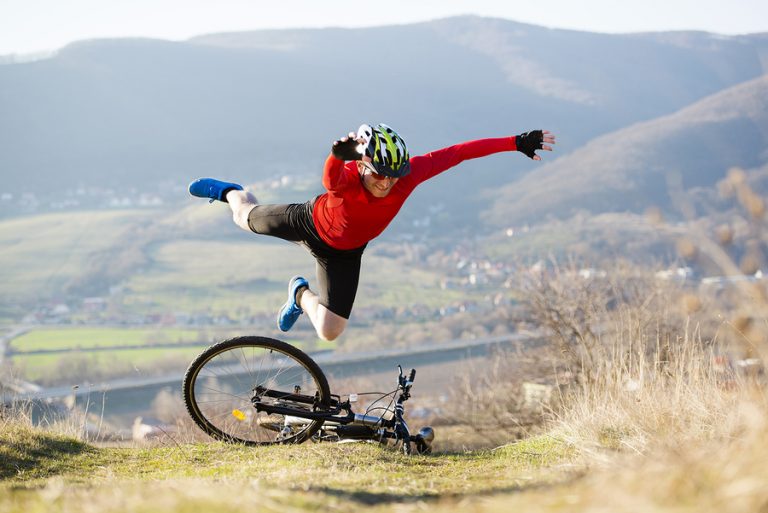
 Common Cycling Injuries and Treatments

Cycling has grown in popularity with recreational, competitive and functional (cycling as a means of commuting) all on the rise. From 1st of January to 31st of December 2014 there were 534 specific cycling related injuries presenting to the emergency department of St. Vincent’s University Hospital in Dublin. Bikes and biking events have become ever more specialist and technical. What has remained static, however, is the human body and with ever expanding cycling events comes a change in the physical demands placed upon the body.
At Premier Physiotherapy our physiotherapists use their advanced knowledge and expertise to provide guidance on cycling injury and rehabilitation and in conjunction with bike fit specialists can work on bike set-up to ensure return to cycling post injury.
Broadly, cycling injuries fall into two main categories:
-
- Overuse/Overload: An injury sustained from a repeated action or resulting from a physical stress/load applied to the body that is greater than the tissues can tolerate.
-
-
- and
-
-
- Traumatic: A physical injury of sudden onset and severity that requires immediate intervention.
Overuse cycling injuries most commonly include knee pain, back and neck pain, achilles tendon problems and wrist pain.
Traumatic injuries most commonly result from accidents due to falls and crashes and typically include fracture/break of the collar bone, the wrist, contusions (bruising) to soft tissue and/or bone and head injury.
Traumatic Shoulder Fracture(Break)
Collar bone injury is the most common fracture seen in cycling and usually happens when cyclists fall onto the point of the shoulder, referring the impact along the collarbone and causing it to break. The break can be very painful and is usually diagnosed by an x-ray.
Pain relief and immobilisation with a sling will be the first course of action. Sometimes, the position of the fracture may require surgery to insert a small plate to hold the bone in place while it heals. The affected arm should remain in a sling for up to 4-6 weeks. During this time our physiotherapists can provide guidance on exercises to ensure the shoulder joint does not stiffen and surrounding areas are well maintained.
As the bone heals and the pain resolves, our physiotherapists will provide further exercises that focus on improving mobility and strength. It is important to remember that moderate weight bearing through the upper extremities is required when cycling.
Scaphoid/Wrist Fracture
The scaphoid is a small bone on the thumb side of the wrist that can fracture when a rider puts a hand out to break a fall. Other bones may also fracture depending on the mechanism of the fall, but the scaphoid is one that most commonly results in complication. Scaphoid fractures often do not show up on an immediate x-ray but will usually present in a follow-up 10-14 days later. Non-union (poor healing) is not uncommon resulting in the need surgery, but in most cases the wrist will be immobilised in a cast/splint for up to six weeks to allow the bone to heal naturally.
Once the cast has been removed, our physiotherapists will guide the person through a series of exercises designed to regain range of motion, strength for the wrist, hand, forearm, elbow and shoulder.
This is very important as a cyclist needs good strength to maintain control of the bike, as well as to comfortably take weight through the upper extremity.
Soft Tissue or Bone Contusion/Bruising.
This is where a muscle or bony prominence – most often around the hip and thigh – gets bruised in a fall.
The impact of the fall can cause damage to the muscle or bone causing swelling and visible bruising.
Like all injuries, where possible you should follow the ‘POLICE’ principle in dealing with these:
Protection, Optimal Loading, Ice, Compression, Elevation
Overuse Knee Pain
Knee pain is the most common pain seen in cyclists and occurs due to the highly repetitive motion of the knee flexing and extending with pedaling.
A knee normally moves over the toes as the pedal goes forward. Excessive sideways motion of the knee or poor bicycle set up can accentuate the forces going through the knee and lead to irritation of various structures around the knee. Where bike set up is correct and cyclist position is good, pain may arise from an over exertion due to increasing distances or cycling effort too quickly.
Our physiotherapists will firstly evaluate the knee to diagnose the problem and advise treatment specific for the tissue irritation/injury.
Once the diagnosis has been determined, a program of rehabilitation will be advised and may include manual therapy, and flexibility/mobility exercises. Strengthening exercises are often required. Education on tissue loading and training loads is important so that wherever possible you can continue to cycle.
Achilles Pain.
Achilles tendonitis/tendinosis is characterised by pain in the Achilles tendon. This occurs as a result inflammation of the tendon (itis) or due to a disorganisation of the structure of the tendon (osis).
Pain management through following the ‘POLICE’ principle, coupled with a rehabilitation program of specific exercises to help encourage repair of the damaged fibers in the tendon and strengthen calf muscles and adjoining areas.
Foot Pain.
Occasionally cyclists suffer foot pain. This may occur due to the constant pressure being applied through the front of the foot during pedaling. This pain may originate from the soft tissues of the foot, but occasionally result from irritation to nerves running through the foot.
This condition is treated locally to facilitate resolution of pain however assessment of footwear or the assessment of cleat/shoe position may be required. Hip position/mobility and strength will be investigated to determine sitting posture and good force generation. Frequently load placed at the foot results from poor cycling technique.
Roberto Pelosi is a Masters qualified physiotherapist and is the owner of Premier Physiotherapy in Dublin, Ireland. He has worked and taught internationally including time with professional soccer clubs in the UK, Rugby league in Australia and toured extensively with Riverdance-The show.
He has a special interest in movement dysfunction and inefficiency and how it relates to injury and performance.